why glass milk bottles are returning & Other milk fun facts…
Although cheap supermarket milk has seen the near demise of the milkman and the daily milk delivery service, it has managed to survive in many areas of the UK and right now, home milk delivery is making a steady comeback - with glass milk bottles playing a key part in the resurgence.
All the media buzz about milk in glass bottles delivered to your doorstep-It’s a growing moovement!
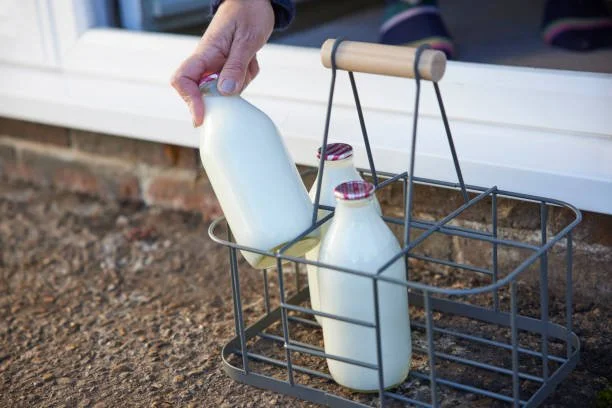
why use glass MILK bottles?
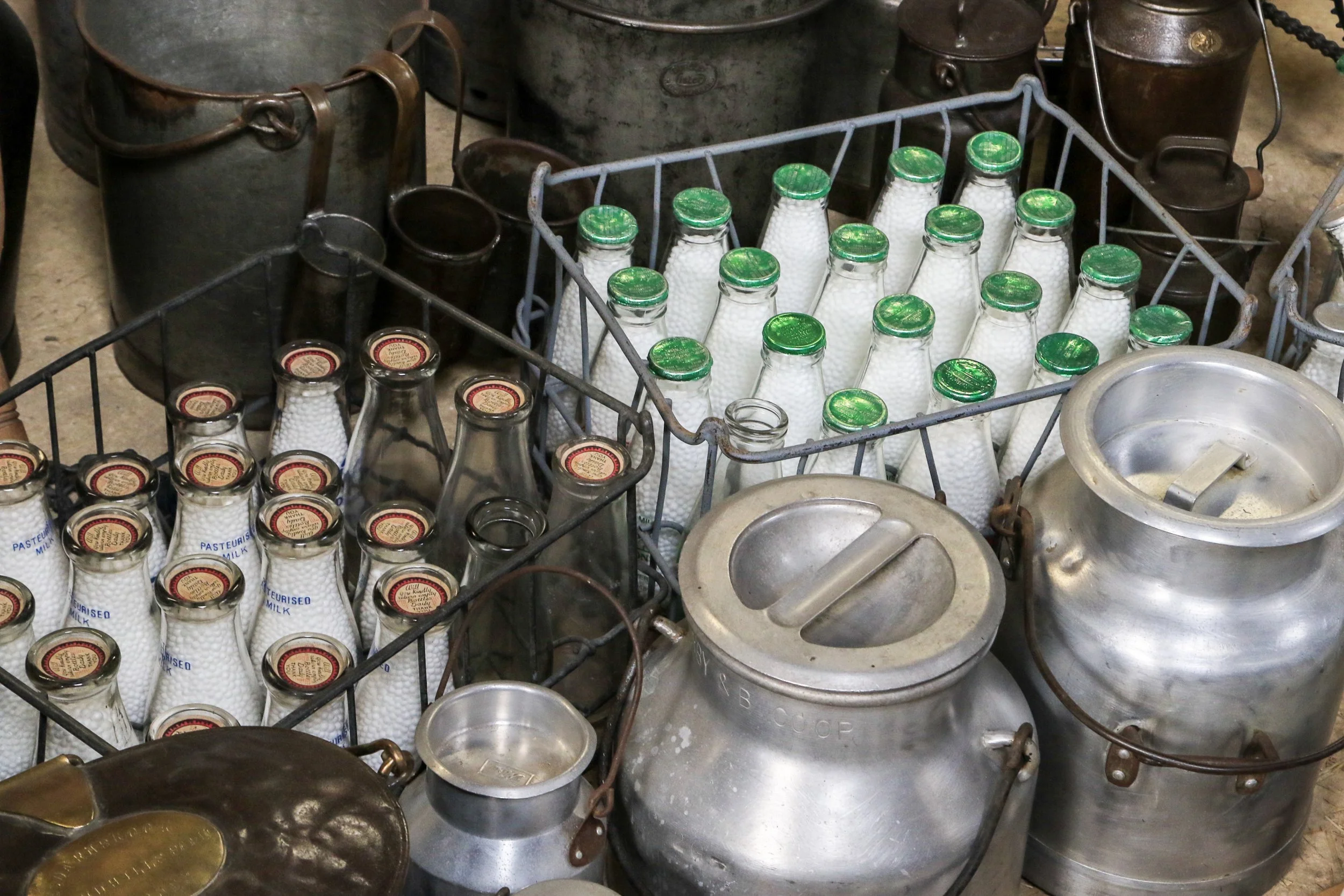
Glass milk bottles continue to make a comeback as the backlash against plastic waste pollution gathers pace among consumers. The nostalgic clink-clink of the bottles is making a return with milk producers reporting a progressive increase in demand for milk in traditional glass bottles. The environmental benefits of using glass include the following:
A glass milk bottle can be washed, sterilised and reused around 25–30 times on average before recycling, and glass can be recycled an infinite number of times thereafter for multiple uses.
Every tonne of glass recycled saves 246kg of CO₂ emissions.
The UK glass sector has a recycling rate of 74.2%, one of the highest of any packaging material.
The average glass milk bottle in the UK already contains about 35% recycled glass.
Glass is chemically inert, meaning it does not absorb flavours or odours and many industry sources consider that glass retains taste and keeps milk fresh for longer, unlike plastic which can impart flavour.
Glass milk bottles have become around 40% lighter than they were 20 years ago, reducing their transportation footprint.
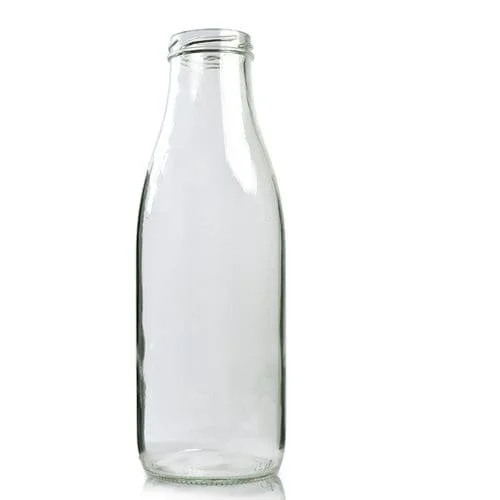
glass milk bottles - history + comeback
Before milk started to be delivered in glass bottles around 1880, milkmen took churns on their rounds and filled customers' jugs by dipping a measure into the churn.
The earliest reference to a ‘milk bottle’ in the Oxford Dictionary dates back to 1831.
The earliest patent for a glass milk bottle with a lid and tin clip was made in the USA in 1880.
The European Patents Office lists about 1,700 patents worldwide with milk bottle in the title.
By 1975, around 94% of milk was packaged in recyclable glass bottles. It was only around 1990 that supermarkets began selling milk in plastic containers and cartons. By 2012, the proportion of milk sold in glass bottles had fallen to just 4%.
The traditional British glass milk bottle still uses the historic “pint” measurement.
UK households use billions of plastic bottles every year. Supporters of reusable glass bottle schemes argue that expanding doorstep milk delivery could significantly reduce plastic waste.
A BBC investigation found that 17 out of 20 dairy businesses had seen a rise in glass bottle sales in 2018, with many dairies crediting David Attenborough's Blue Planet II for the surge in interest.
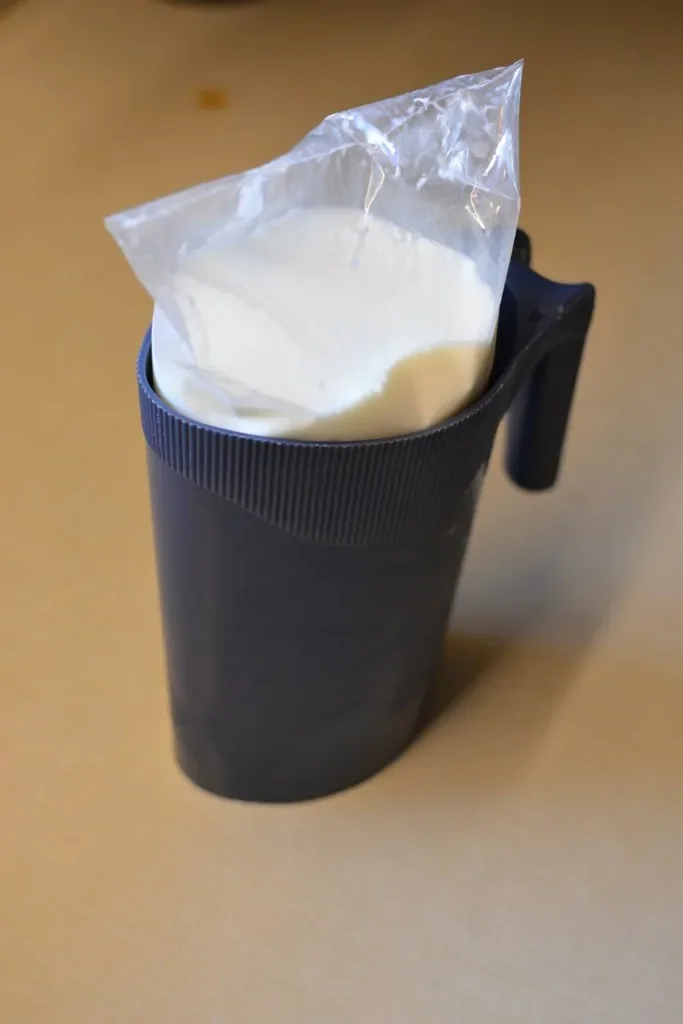
whatever happened to the milk bag?
Do You Remember Milk in a Bag?
It may seem like a quirky memory, but for a few years in the late 2000s and early 2010s, milk in plastic pouches — stored in a reusable jug in your fridge — was a genuine attempt by major UK supermarkets to tackle plastic waste.
Waitrose and Sainsbury's both trialled the Canadian invention, with Sainsbury's rolling it out nationwide in 2010 after a £2.2 million investment in dedicated production. The bags used 75% less packaging than a standard plastic bottle — a compelling environmental credential.
But British shoppers proved stubbornly attached to their habits. Waitrose pulled out first, citing poor demand and increased milk waste. Sainsbury's persisted until 2015, when a change of supplier ownership effectively ended the experiment.
The final nail was practical: consumers reported that the spiked jug mechanism could introduce bacteria from the outside of the bag into the milk, causing it to spoil rapidly. No amount of eco-credentials could survive that. The milk bag quietly disappeared from UK shelves — leaving the glass bottle, with its nostalgia, its simplicity, and its genuine sustainability story, to win the packaging argument the old-fashioned way.
However, the milk bag never disappeared globally. Milk bags remain standard packaging in parts of Canada, India, Israel, and a number of continental European countries.
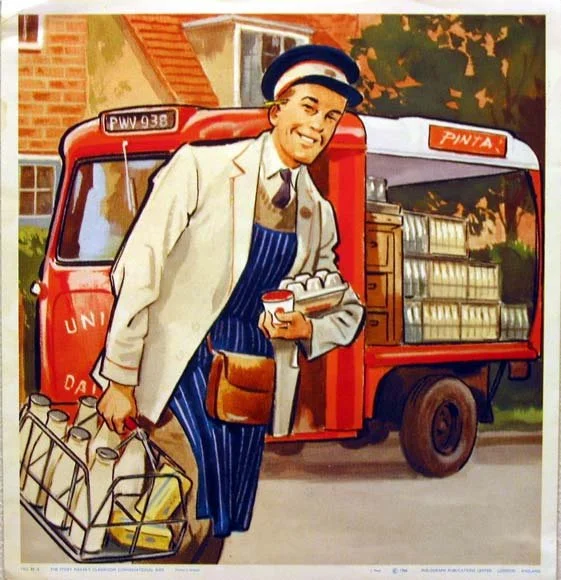
the milkman cometh…..again!
It’s easy to understand how home milk delivery went into decline.
In the early 1970s, 99% of UK households had milk delivered to their door.
Between 1995 and today, doorstep delivery has declined from 45% to around 3% of the retail milk market.
Milk deliveries traditionally took place in the early hours of the morning, well before most people woke up.
The number of doorstep delivery customers rose to a peak of 670,000 in July 2020 from a pre-pandemic low of 503,000, as lockdown drove consumers back to local delivery services.
In a recent survey, the key reasons given for using a milkman were supporting local businesses (70%) and convenience (54%), with quality, British provenance, and environmental friendliness also featuring strongly.
Older British milk bottles were sealed with foil caps.Birds, famously learned to peck through the foil to drink the cream from the top of the milk bottle.
Electric powered ‘milk floats’ were popular because they were quiet and practical for early morning short delivery routes.The electric milk float vehicle fleet has dwindled from tens of thousands at its 1970s peak to fewer than 400 today.
dairy news - facts + figures
The UK is the thirteenth-largest milk producer in the world.
UK milk production reached around 14.9 billion litres in 2023/24.
In 2024/25, UK liquid milk utilisation was 44% of total milk, with milk for cheese at 33%.
The average milk yield per cow in the UK in 2023/24 was 8,148 litres per year — that's over 22 litres a day, every day.
The average UK household spends about £1.90 on milk per week.
Semi-skimmed milk accounts for the largest share of liquid milk sold in Great Britain.
As of mid-2024, Scotland had 773 dairy herds with 180,250 dairy cows, and an average herd size of 233 cows.
The main Scottish dairy regions are Ayrshire, Dumfriesshire, Aberdeenshire, and Wigtownshire.
All facts researched, sourced, validated and traceable to a reputable named media source.